Define what the finish must do
Contrast, tactility, hierarchy and viewing conditions determine whether foil, relief, letterpress, cutting or coating is the right process.
Foil · emboss · letterpress · die-cut
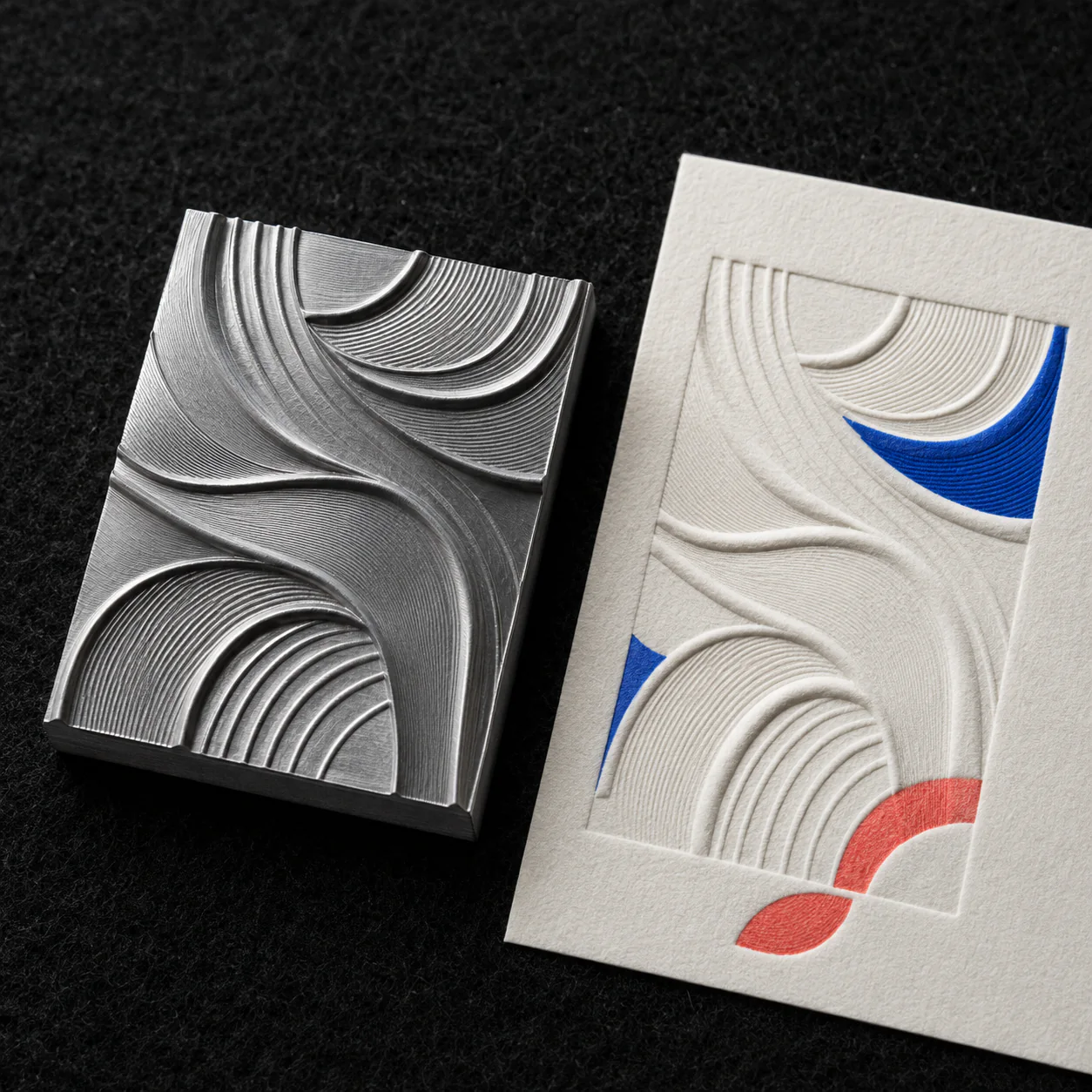
Use finish to create contrast, hierarchy or touch, not decoration without purpose. We test pressure, depth, coverage and stock so foil stays sharp and relief holds its form.
One accountable team
Start with the audience, application, quantity or supplied artwork. We turn it into a clear specification for materials, production, finishing and delivery.
See the production routeOutputs
Production details
Production route
Contrast, tactility, hierarchy and viewing conditions determine whether foil, relief, letterpress, cutting or coating is the right process.
Minimum line weights, trapping, relief depth, coverage and register tolerances are resolved before dies or plates are ordered.
The same tooling behaves differently on coated board, cotton and recycled stock, so paper, ink and finish are assessed together.
Frequently asked
Embossing raises an area above the surface; debossing presses it below. Paper thickness, fibre, artwork and tooling determine the achievable depth and sharpness.
Yes. Traditional hot foil is opaque and can work well on dark or coloured stocks. Heavily textured papers should be tested before the full run.
Yes, when process order, registration and stock are planned together. Foil with embossing, duplexing with edge colour and print with die-cutting are common combinations.
Usually. Tooling, setup, curing or drying and multiple passes add stages. We identify those dependencies in the production schedule.
Request a production plan
Share the dimensions, quantity, site, artwork status and deadline for special finishes. We will confirm the material, production route and installation scope.