Set the arrival date before the print date
Work backwards from when recipients need the gift, not when boxes should leave production. Include internal distribution, address confirmation, packing, quality control and a contingency for rework.
If the campaign has multiple recipient tiers, freeze the common structure first and use sleeves, cards or inserts for controlled variation.
Design around the contents
Dates, fragrance, ceramics, books and mixed corporate gifts each need different support. Measure the real products, consider weight and temperature, and prototype how each item is lifted from the box.
The insert should present the product clearly, support it in transit and make each item easy to lift.
Use seasonal cues with restraint
Seasonal character can come from a considered material, opening ritual, precise pattern or controlled foil detail. This gives the occasion a clear presence without relying on a catalogue of familiar symbols.
Build Arabic and English messages into the structure early so the greeting card and outer pack belong together.
Approve the full combination
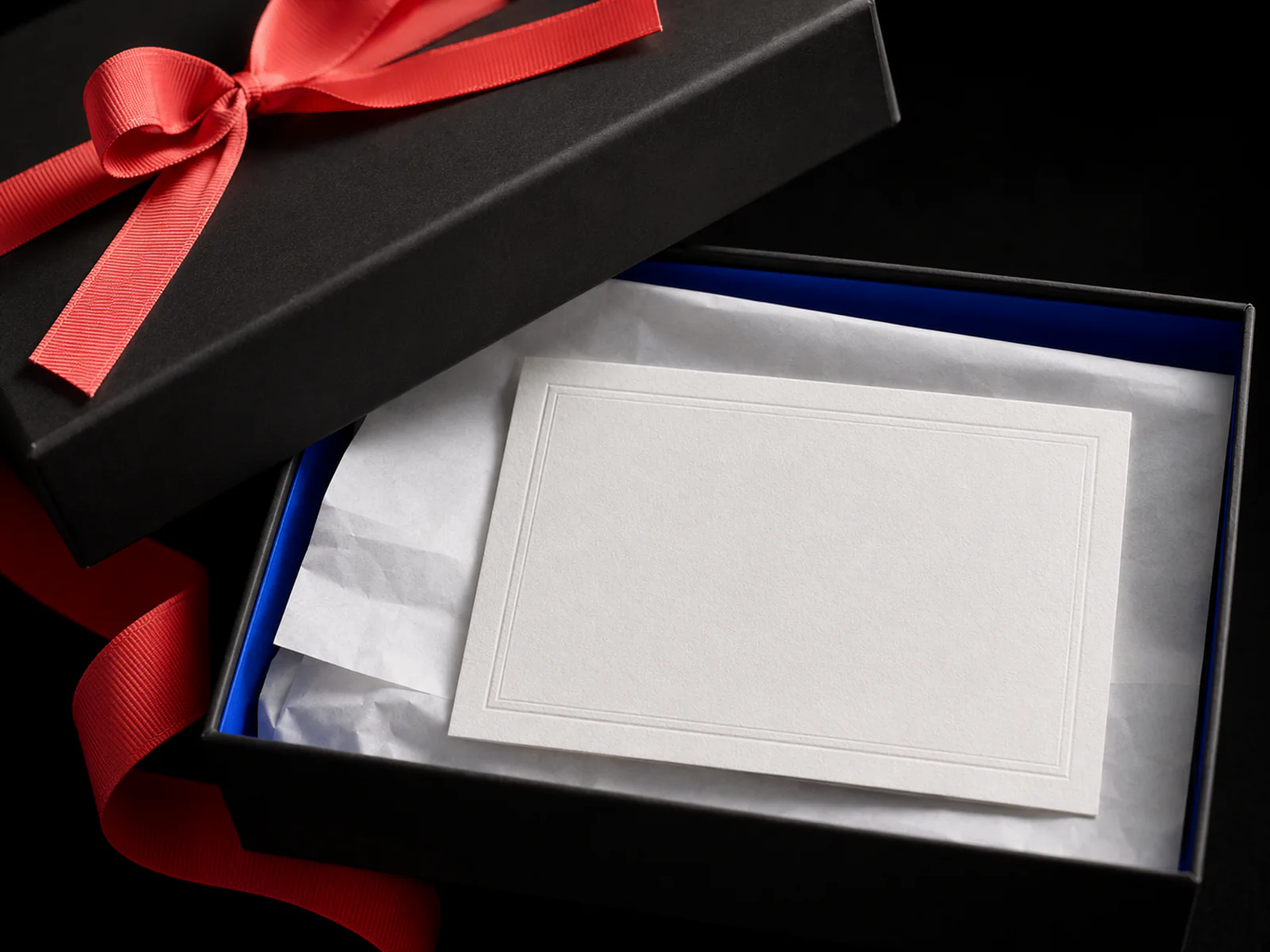
Paper, wrap, foil, embossing, ribbon and insert should be seen together. Metallic colour changes with light; dark papers affect print; thick wraps change corner quality.
A finished sample is especially valuable when stakeholders approve by photograph while recipients will experience the object in hand.
Make assembly part of the specification
Define what arrives flat, what is pre-assembled, who places products, how cards are personalised and where final quality control happens. Clear assembly instructions protect the design through the final production stage.