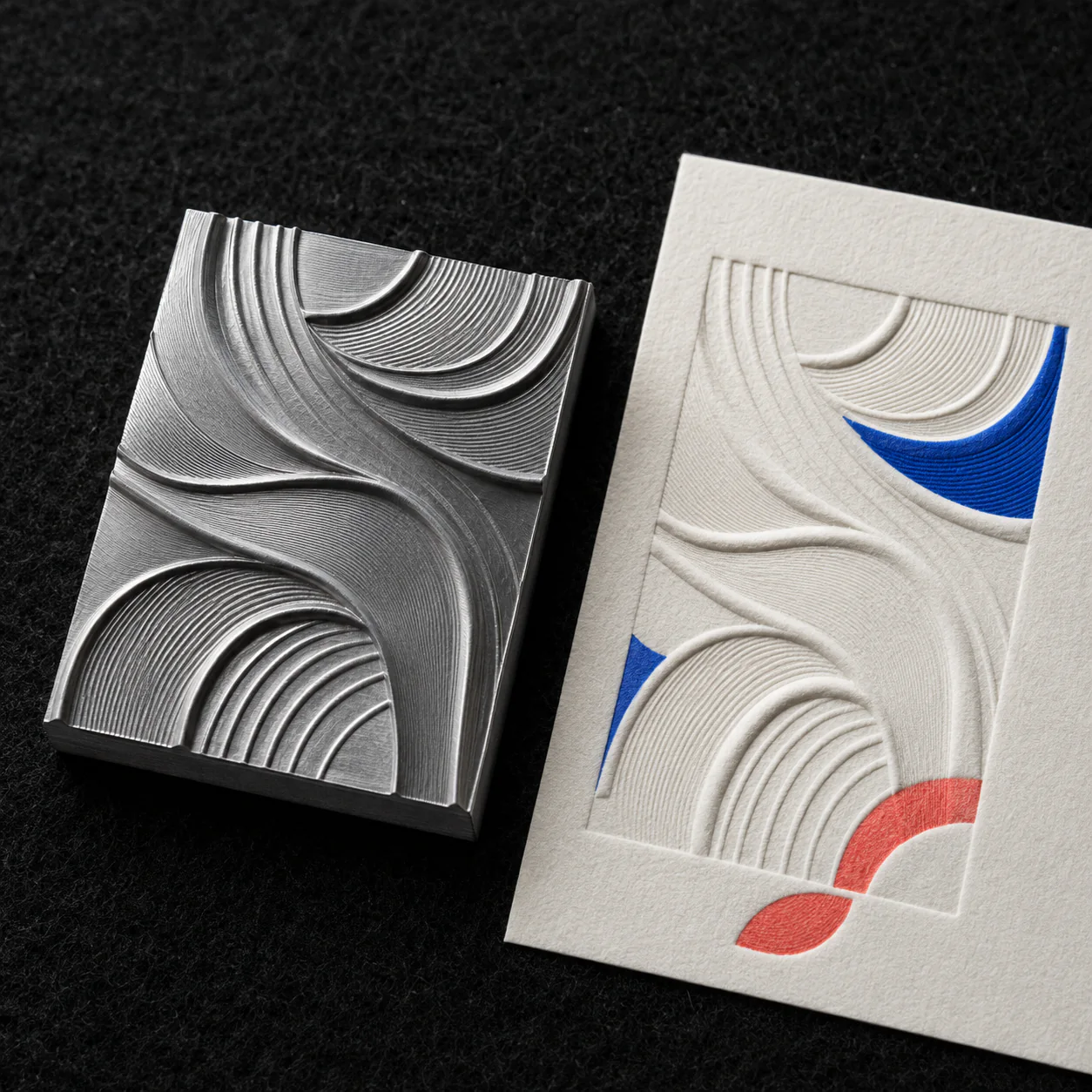
Embossing raises the design
Embossing presses paper between a raised and recessed pair of dies. The image stands above the front surface and creates a corresponding shape on the reverse. A blind emboss uses no ink or foil; a registered emboss aligns relief with printed or foiled artwork.
It works best when the artwork has enough space between details and the paper has sufficient body to hold the form.
Debossing presses into the sheet
Debossing pushes the design below the surface, usually with one die and a counterforce. It can feel quieter and architectural, especially on thick uncoated stock.
A deep deboss can show through or bruise the reverse, so it is important to decide whether both sides will be seen. Duplexing two sheets after finishing can create a clean back.
Letterpress adds ink and impression
Traditional letterpress transfers ink from a raised plate while applying pressure. Contemporary work often embraces a visible impression, although very fine type and large solids need different setup and restraint.
Soft cotton and mould-made papers show impression beautifully. Hard or coated stocks may hold sharper ink but offer less depth.
Artwork determines what is possible
Hairlines, tight counters and closely spaced elements can close under pressure. Large flat areas may not print as evenly as offset. The maker should review the actual finish layer before tooling is ordered.
- Keep finish artwork vector wherever possible
- Separate each process onto a clearly named layer
- Avoid assuming screen effects translate directly to pressure
- Allow realistic registration tolerance between processes
Choose by the intended effect
Use embossing when a raised mark or pattern should catch light. Use debossing for a recessed, restrained impression. Use letterpress when ink and tactile pressure belong together. Combine processes when each contributes a distinct function.