Format 08 · Invitation
Invitation
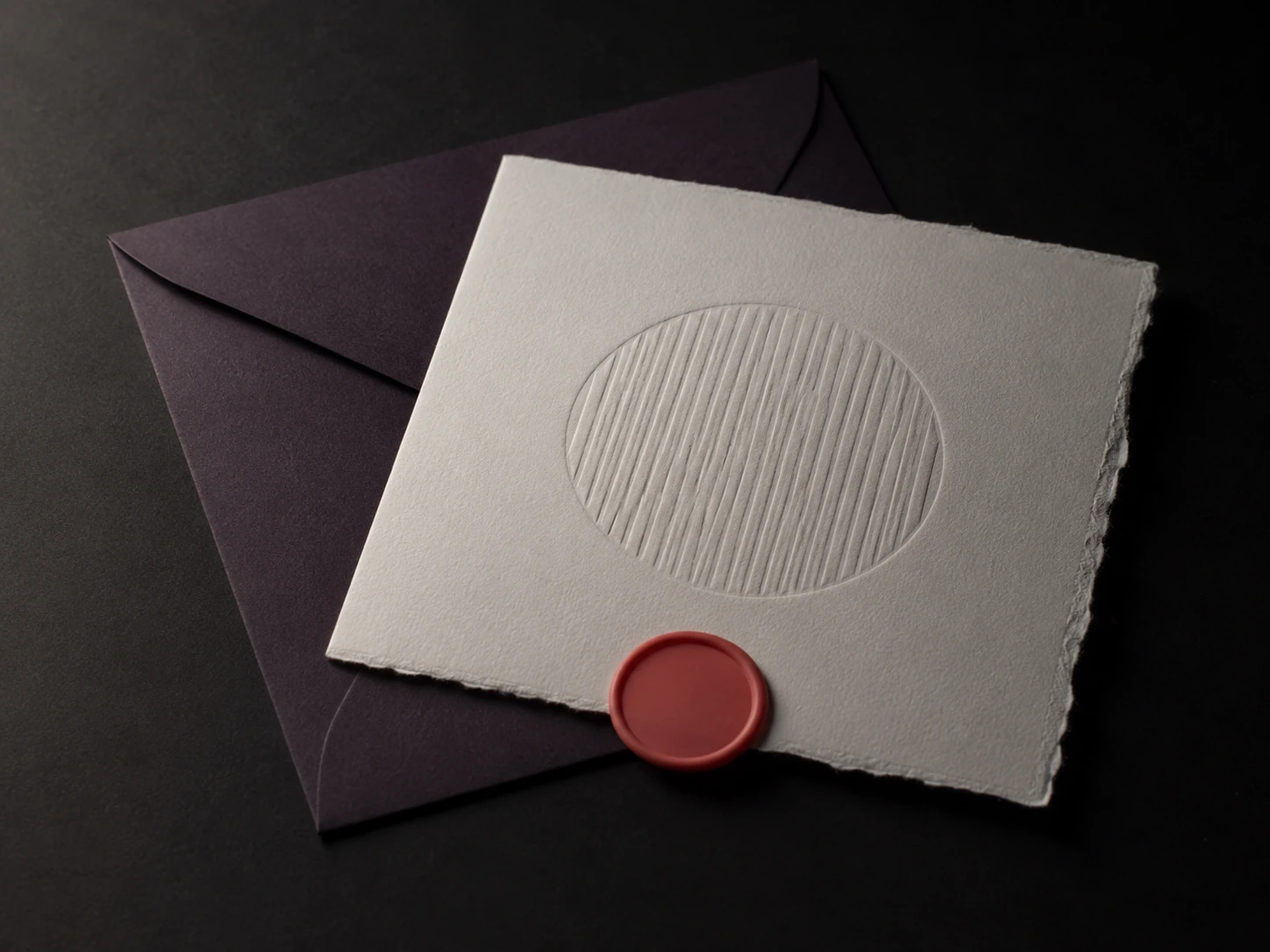
Short-run invitations where paper, impression, edge detail and assembly carry much of the experience. Finishing is selected for what it adds to the message and the handling.
A strong fit when
- The run is short enough that hand finishing is affordable
- The recipient and occasion justify a considered printed object
- You want a process that reads by touch before it is read by eye
Consider another format when
- The quantity is high enough that hand assembly dominates the cost
- The requirement is purely functional and a simpler printed or digital format will do the job
How it is built
The construction decisions that shape the result.
- 01Duplexing
- Two sheets bonded to make one thick card, often with a coloured core visible at the edge. This can create a 600gsm card with a different colour on each face.
- 02Impression depth
- How far the letterpress or emboss die pushes into the stock. A deep impression needs a soft, thick, long-fibre paper; coated board responds differently and generally holds less depth.
- 03Deckle edge
- A torn rather than cut edge. It occurs naturally on mould-made stock and can be simulated on other papers by tearing against a rule.
- 04Hand assembly
- Sealing, banding, tissue lining and envelope lining. The labour grows with the quantity and can become a significant part of the production cost.
Stocks we run
- Cotton and mould-made papers, 300–700gsm
- Duplexed stock with a coloured core
- Coloured envelopes and lining papers
Finishes available
- Letterpress
- Blind emboss and deboss
- Hot foil
- Edge painting
- Wax seals
- Envelope lining
Quantities and lead time
Both depend on structure, stock and finish, and quoting them without a live brief would be misleading. Share the job and we will price the specification against your date.
Start a invitation briefSeen in
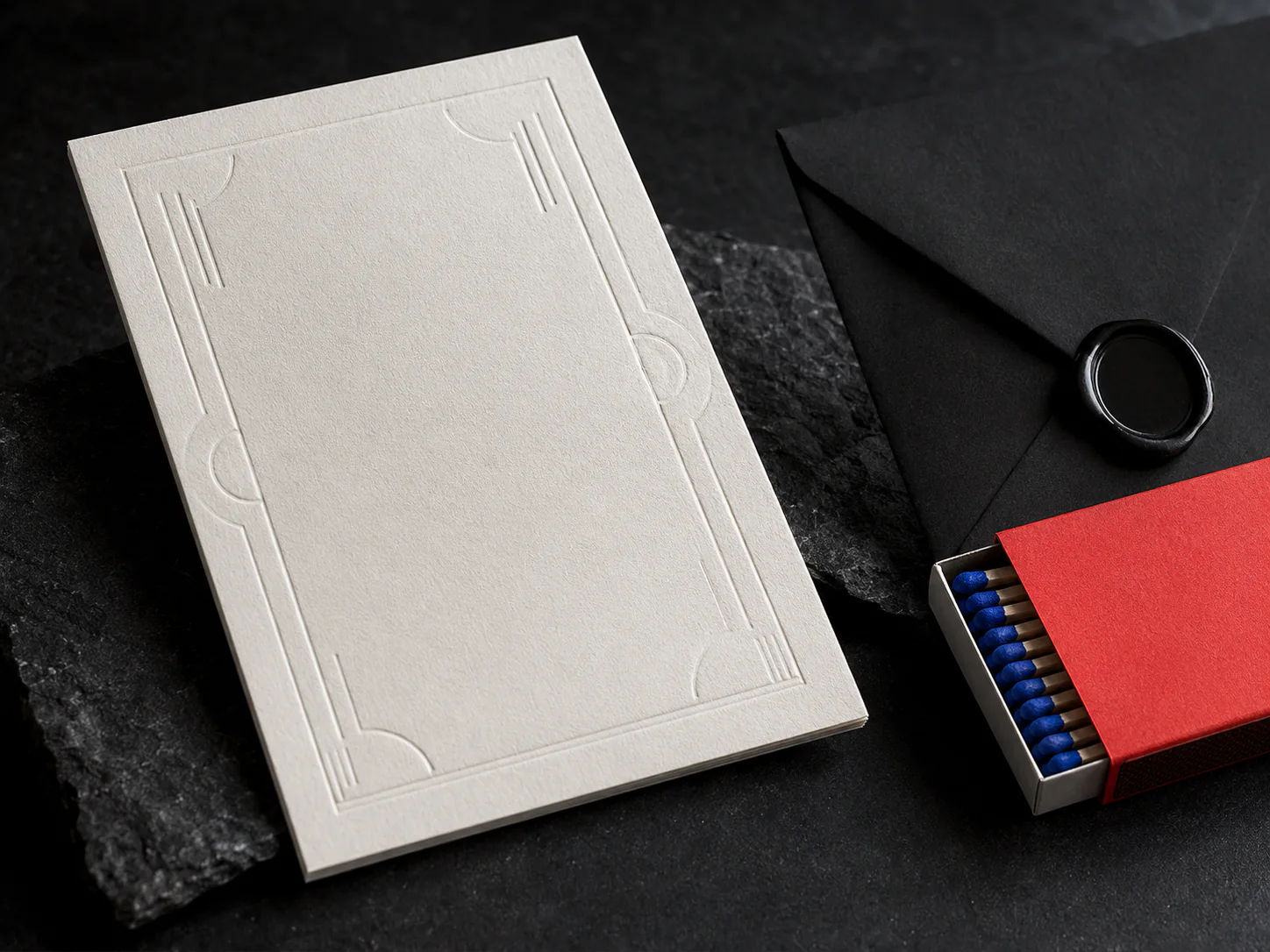 Night Service
Services that cover it
Invitation questions
Useful before we begin.
01How deep can the impression go?+
The achievable depth depends on the artwork, die, pressure and paper. A soft 600gsm cotton stock can hold a pronounced impression, while coated board generally shows less depth with the same die. A test on the intended stock is the useful reference.
02Can you print Arabic calligraphy in letterpress?+
Yes, using photopolymer or magnesium plates. Fine connected strokes and hairline joins need careful plate preparation and usually a lighter impression than a heavy sans-serif form, so the artwork should be proofed on the intended stock.
Specify the project
Let us shape the right invitation around the job.
Share the contents, dimensions, quantity, finish direction and delivery date. We will identify the decisions that need a sample, proof or structural check.