Format 02 · Carton
Folding carton
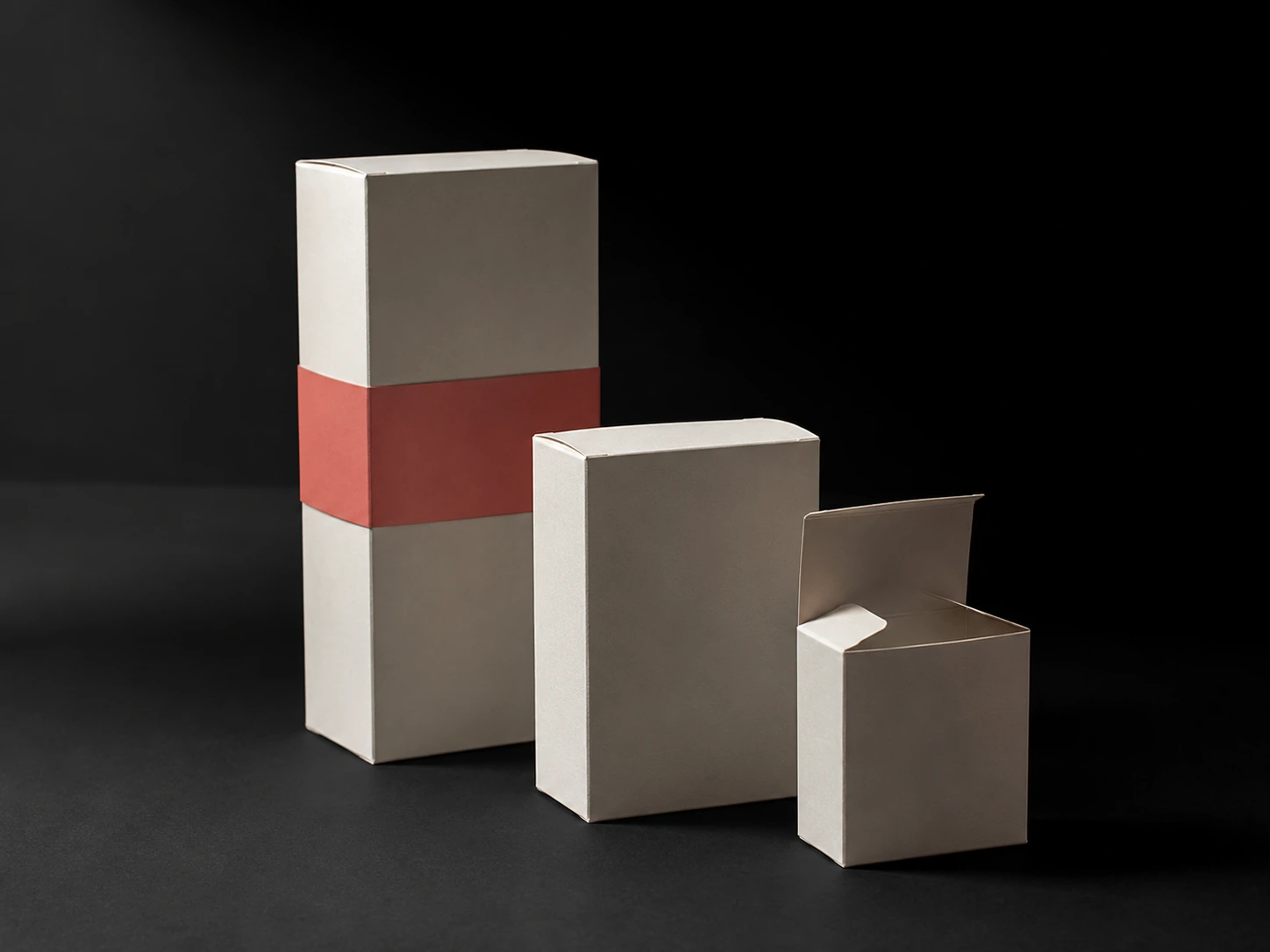
One printed sheet, cut, creased and glued into a light, flat-pack structure. A versatile choice for retail packaging, product ranges and repeat production.
A strong fit when
- The unit sits on a shelf or in a display
- The run benefits from repeatable conversion and flat packing
- The range has variants that can share one cutting die
- It has to ship and store flat
Consider another format when
- The contents are heavy enough to burst the glue seam
- The box is the gift rather than the wrapper
- You need a closure that survives being opened repeatedly
How it is built
The construction decisions that shape the result.
- 01Cutting die
- The steel-rule tool that cuts and creases the blank. One die can often support several sizes or variants in a range when the structure is planned for it.
- 02Tuck end
- Straight tuck places both closing flaps in the same direction, while reverse tuck alternates them. A reverse-tuck layout can use less board and may provide a stronger closure for suitable products.
- 03Crease
- A compressed line rather than a cut. The board folds along it, so heavy ink coverage across a fold needs to be planned with the stock and grain direction.
- 04Glue seam
- The permanent joint that closes the carton body. It is normally positioned away from the main display face and critical artwork.
Stocks we run
- Folding boxboard, 250–450gsm
- Uncoated certified-fibre board
- White-lined chipboard
- Metallised and barrier-lined boards
Finishes available
- Blind emboss
- Hot foil
- Matt and gloss lamination
- Window patching
- Die-cut apertures
Quantities and lead time
Both depend on structure, stock and finish, and quoting them without a live brief would be misleading. Share the job and we will price the specification against your date.
Start a carton briefSeen in
 Aster Objects
Services that cover it
Folding carton questions
Useful before we begin.
01Will the ink crack along the folds?+
It can happen where heavy solid coverage crosses a crease, particularly on some uncoated boards. The risk can be reduced through artwork placement, an appropriate crease and a suitable board and grain direction. We review these points on the dieline before production.
02Can one die cover several product sizes?+
Often, yes, when the range is planned around shared dimensions or a common structure. Considering this early can reduce duplicate tooling while keeping the variants visually related.
Specify the project
Let us shape the right carton around the job.
Share the contents, dimensions, quantity, finish direction and delivery date. We will identify the decisions that need a sample, proof or structural check.